
Electric vehicles (EVs) are becoming more common on the road, and having the right charging system at home or at your business can make ownership much more convenient. Choosing the proper EV charging system involves understanding your needs, your electrical capacity, and the available charging options.
Understand Charging Levels
EV chargers are typically classified into three levels:
-
Level 1: Uses a standard 120-volt outlet and is the slowest option, often adding 3–5 miles of range per hour. It works well for drivers who travel short distances and can leave their car plugged in overnight.
-
Level 2: Requires a 240-volt outlet and can add 12–60 miles of range per hour, depending on the vehicle and charger. This is the most popular home and commercial choice, offering a good balance between speed and cost.
-
Level 3 (DC Fast Charging): Primarily used in public charging stations, these systems can charge most EVs to 80% in about 20–40 minutes. They require significant power and are not typically installed in residential settings.
Assess Your Electrical Capacity
Before purchasing a charger, you need to know whether your current electrical panel can handle the added load. An overloaded system can cause tripped breakers or even safety hazards. This is why it’s important to consult with an electrician before making a final decision. They can assess your service panel, recommend any upgrades if needed, and ensure your installation meets all electrical codes.
Consider Your Daily Driving Habits
If you commute long distances or frequently drive your EV throughout the day, a faster charging system may be worth the investment. On the other hand, if your driving is limited to short local trips, a lower-capacity charger may be sufficient and more cost-effective.
Look at Smart Charging Features
Many modern EV chargers come with “smart” capabilities, such as scheduling, usage tracking, and load balancing. These features can help reduce energy costs by charging during off-peak hours and provide better insight into your charging habits.
Plan for Future Needs
If you’re considering buying another EV in the future or upgrading to a model with a larger battery, it’s wise to select a charger with higher capacity now. This can save you from having to replace your charger later.
 Installation and Safety
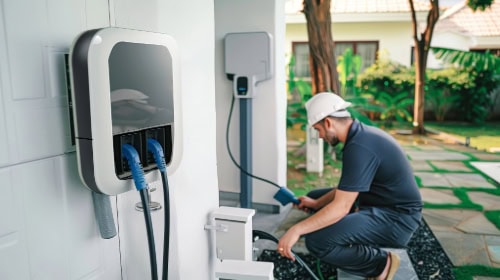
Always have your EV charging system installed by a qualified professional. Proper installation ensures not only safe operation but also that your system works at its full capacity. Your electrician can also help you select the right location for the charger to maximize convenience and protect it from the elements.
The right EV charging system depends on your vehicle, driving habits, electrical capacity, and future plans. With the right planning and expert guidance, you can enjoy faster, safer, and more efficient charging for years to come.
